Why account security matters: protect your digital life

Most people assume hackers are after big corporations, government systems, or celebrities. The reality is far less dramatic and far more personal. Your streaming accounts, email logins, and subscription credentials are exactly what cybercriminals want. 3,322 data breaches hit individuals in 2025 alone, affecting over 275 million victims. That number isn’t abstract. It means real people lost access to their accounts, had their identities stolen, and spent months cleaning up the damage. Understanding account security isn’t just for IT professionals. It’s the single most practical thing you can do to protect your digital life right now.
Table of Contents
- The real risks of ignoring account security
- How compromised accounts lead to bigger problems
- Barriers to strong security: Why people ignore best practices
- Essential steps to protect your accounts
- A fresh perspective on account security: Why small changes matter more than big systems
- Ready to secure your digital life with Accroku?
- Frequently asked questions
Key Takeaways
| Point | Details |
|---|---|
| Rising personal risk | Data breaches now target millions of individuals, not just big companies. |
| One breach, many threats | Compromised accounts can lead to chain-reaction attacks and financial loss. |
| Excuses increase danger | Ignoring security due to fatigue or convenience puts you at greater risk. |
| Actionable steps help | Simple habits and the right tools can drastically increase your account security. |
The real risks of ignoring account security
Ignoring account security isn’t a neutral choice. It’s an open door. When your credentials are exposed, the damage rarely stops at one account. Attackers move fast, and the consequences for everyday users are very real.
Data breaches expose personal information leading to identity theft and financial fraud, with experts estimating annual costs in the tens of billions. These aren’t just numbers on a report. They represent people disputing unauthorized charges, filing police reports, and rebuilding credit scores.
Here’s a look at how breach activity has scaled over recent years:
| Year | Reported breaches | Victims affected |
|---|---|---|
| 2021 | 1,862 | ~294 million |
| 2022 | 1,802 | ~422 million |
| 2023 | 2,365 | ~350 million |
| 2024 | 3,158 | ~1.35 billion |
| 2025 | 3,322 | ~275 million |
The trend is unmistakable. Breaches are becoming more frequent, and no one is off the target list.
“In 2025, there were 3,322 data breaches affecting over 275 million victims, a 79% increase over five years.”
Once your credentials are stolen, here’s how attackers typically use them:
- Sell them on dark web marketplaces within hours of a breach
- Test them across hundreds of sites using automated tools (credential stuffing)
- Access your email to reset passwords on banking or shopping accounts
- Drain linked payment methods or make fraudulent purchases
- Hijack your streaming or subscription accounts and resell access
- Use your identity to open new credit lines or file false tax returns
The speed of this process is what catches most people off guard. By the time you notice something is wrong, the damage is often already done. Protecting your accounts before a breach happens is always easier than recovering after one.
How compromised accounts lead to bigger problems
A single breached account rarely stays isolated. Attackers understand that most people reuse passwords, and they exploit that habit systematically. One cracked login becomes a skeleton key.
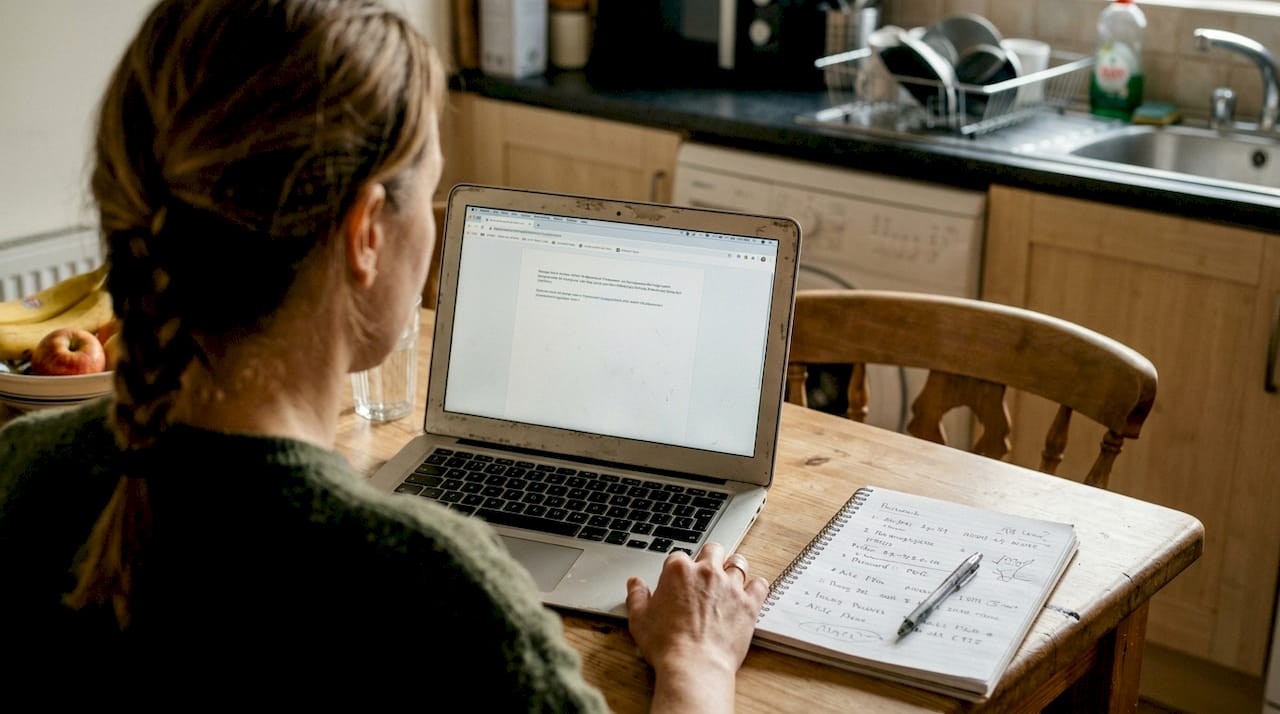
Breached credentials enable account takeovers, financial loss, and further attacks. The Federal Trade Commission recommends regularly checking haveibeenpwned.com and changing passwords on compromised accounts immediately.
Here’s the typical chain reaction after one account is compromised:
- Email account breached — attacker gains access to your inbox
- Password reset requests sent — attacker resets passwords on linked accounts
- Banking or payment apps accessed — funds transferred or cards charged
- Streaming and subscription accounts hijacked — resold or locked out
- Personal data harvested — name, address, and ID details collected
- New accounts opened in your name — loans, credit cards, or utilities
- Damage compounds — credit score drops, recovery takes months
Each step feeds the next. What started as a leaked password from a forgotten forum account can spiral into a full identity theft case.
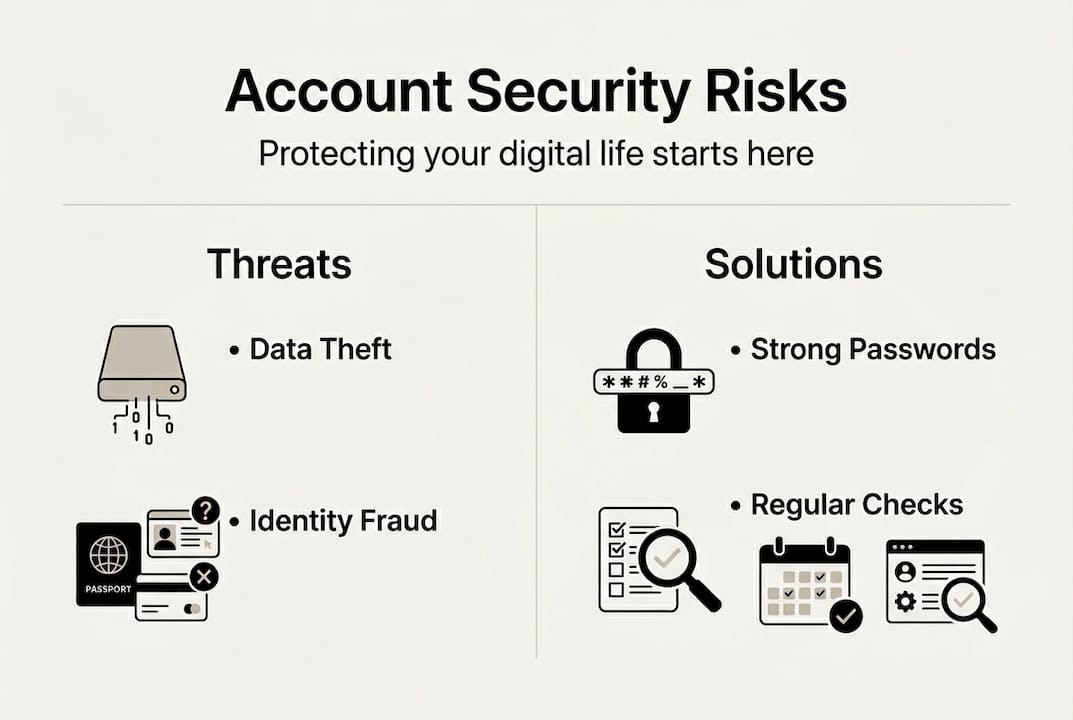
A striking 80% of consumers received breach notices in recent years, yet many took no action. That gap between awareness and response is exactly what attackers count on.
Pro Tip: Visit haveibeenpwned.com right now and enter your email address. If any of your accounts appear in a known breach, change that password immediately and check every account where you used the same one.
The most dangerous assumption you can make is that a breach notification doesn’t apply to you. Even if the compromised site seems minor, attackers will test those credentials everywhere. Treat every breach notice as urgent.
Barriers to strong security: Why people ignore best practices
If the risks are so high, why do so many people put security on the back burner? The answer isn’t laziness. It’s a mix of psychology, habit, and a very human tendency to underestimate personal risk.
Here are the most common rationalizations people use:
- “I have nothing worth stealing” — Attackers don’t care about your net worth. They want your credentials, your identity, and your access.
- “It’s too complicated” — Security tools have never been simpler. Most take under five minutes to set up.
- “I’ll deal with it later” — Breaches don’t wait for a convenient time.
- “It won’t happen to me” — With record 3,332 data compromises in 2025, the odds are no longer in your favor.
- “I already have antivirus software” — Antivirus protects your device, not your accounts.
There’s also a real psychological phenomenon called security fatigue. When you receive breach notices repeatedly, your brain starts filtering them out as noise. This is a documented response to information overload, and it’s dangerous.
“Some experts note that user fatigue from frequent breach notices leads to complacency, making users less likely to act even when their data is directly at risk.”
The more you tune out, the more exposed you become. Attackers know this and time their campaigns to exploit that fatigue.
Pro Tip: Overcome password fatigue with two simple moves. First, use a password manager like Bitwarden or 1Password to generate and store unique passwords automatically. Second, enable two-factor authentication (2FA) on your most important accounts so even a stolen password isn’t enough to get in.
The goal isn’t perfection. It’s making yourself a harder target than the next person. Attackers go for the easiest wins first.
Essential steps to protect your accounts
Now that you know why security matters and what’s standing in your way, it’s time to take action. Here’s exactly how to build stronger account security starting today.
- Use a password manager — Generate and store unique, complex passwords for every account without memorizing them.
- Enable two-factor authentication (2FA) — Add a second verification step so stolen passwords alone can’t unlock your accounts.
- Check for breaches regularly — Use haveibeenpwned.com or your password manager’s built-in monitoring to stay informed.
- Audit your accounts — Delete or deactivate old accounts you no longer use. Dormant accounts are easy targets.
- Update passwords after any breach notice — Don’t wait. Change the affected password and any account using the same one.
- Use unique emails for sensitive accounts — A separate email for banking or subscriptions limits exposure if your main address is compromised.
- Review connected apps — Revoke access for third-party apps you no longer use that are linked to your accounts.
Not sure whether a password manager is worth it? Here’s a quick comparison:
| Feature | Password manager | Manual tracking |
|---|---|---|
| Unique passwords per site | Yes, auto-generated | Rarely practical |
| Breach monitoring | Built-in alerts | Manual checks only |
| Time to log in | Instant autofill | Slow, error-prone |
| Risk of reuse | Eliminated | Very high |
| Setup time | Under 10 minutes | Ongoing effort |
The record 3,332 data compromises in 2025 affected 278.8 million individuals. Even one of these steps reduces your exposure significantly. You don’t need to do everything at once. Pick one action today and build from there.
A fresh perspective on account security: Why small changes matter more than big systems
Here’s something most security guides won’t tell you: the biggest risk isn’t that you’re using the wrong tool. It’s that you’re waiting for the perfect system before doing anything at all.
We’ve seen it repeatedly. Someone reads about enterprise-grade security setups and decides their situation isn’t serious enough to warrant that level of effort. So they do nothing. Meanwhile, a simple password change or a five-minute 2FA setup would have kept them safe.
Security isn’t a destination. It’s a habit. The person who consistently uses a basic password manager and checks for breaches twice a year is far better protected than someone who researches advanced tools but never implements them.
Attackers don’t target complexity. They target convenience. If your accounts are slightly harder to crack than the average user’s, you’re already ahead of most targets. Small, consistent actions compound over time. One updated password today, one 2FA setup tomorrow, one breach check next week. That’s a security posture that actually holds.
You don’t need to be a tech expert. You just need to start.
Ready to secure your digital life with Accroku?
Putting these tips into practice is easier with the right tools in your corner. Good habits are the foundation, but the right digital products make security simpler and more effective for everyday users.
At Accroku, we offer a range of digital security products designed for people who want real protection without the complexity. Whether you’re looking for a VPN to keep your connection private or need reliable account tools, we’ve got you covered. Check out our NordVPN options for fast, trusted protection that works across all your devices. With instant delivery, automatic replacement protections, and 24/7 support, securing your digital life has never been more straightforward.
Frequently asked questions
What is account security in simple terms?
Account security means protecting your online profiles, passwords, and personal data from unauthorized access or theft. It covers everything from the strength of your passwords to the tools you use to monitor for breaches.
How do data breaches affect regular users?
Data breaches expose personal information leading to identity theft and financial fraud, and these consequences hit everyday users just as hard as high-profile targets. Even a minor breach can trigger a chain of account takeovers.
Is using the same password for multiple accounts really risky?
Yes. Breached credentials enable account takeovers across every site where you reuse that password, multiplying the damage from a single breach significantly. Unique passwords for every account are non-negotiable.
What’s the easiest way to check if my credentials are compromised?
Visit haveibeenpwned.com, enter your email address, and you’ll instantly see if it appears in any known data breach. If it does, change that password right away and update it anywhere else you used it.
Can security fatigue really make me less safe?
Absolutely. Frequent breach notices can cause users to tune out and stop taking action, which is exactly when attackers strike. Treating every notice as urgent, even when they feel routine, is what keeps you protected.
Recommended
Explore premium digital products on Accroku
Instant delivery, 24/7 support, and automatic replacement protection on every order.
Browse products